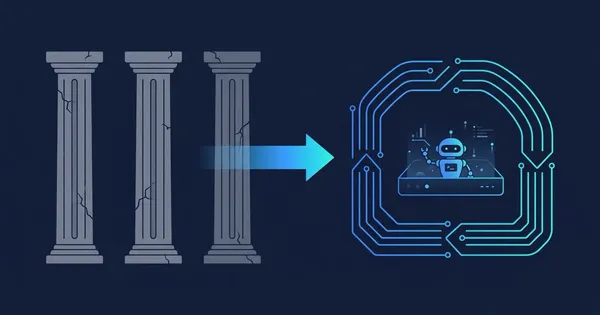
The Three Pillars Were Built for Humans
Metrics, logs, and traces were built for humans and cheap storage. AI inverts both assumptions, and the next maturity level is a deterministic replay sandbox.
Latest insights on API testing, performance optimization, and software development best practices from the Speedscale team.
Metrics, logs, and traces were built for humans and cheap storage. AI inverts both assumptions, and the next maturity level is a deterministic replay sandbox.

A second run of our AI bug-fixing benchmark shows where captured traffic lifts agents toward 90%, why service maps barely help, and which bugs still fail.

Using 'production-similar' data in pre-production is a major security risk. Learn why traditional masking fails, where hidden PII hides, and how to fix it.
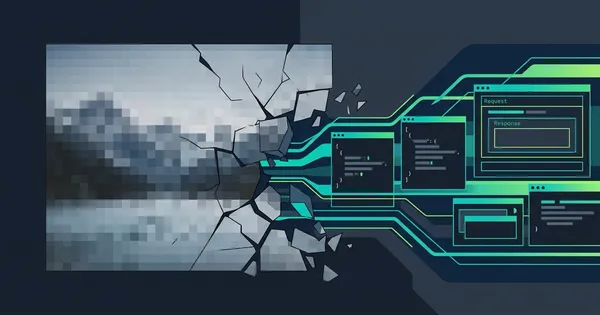
Logs, metrics, and traces are a lossy compression of production. Five things you can do with a traffic data lake that observability can't.
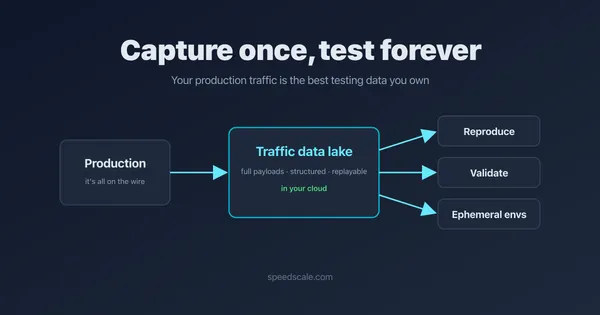
Production traffic is the most complete record of what your system does, and most teams throw it away. One capture powers reproduce, validate, and sandbox.

MSA clauses and contractual guarantees aren't an architecture. If your production traffic leaves your cloud, you're trusting a policy, not a system.

AI-generated code breaks traditional mocking. Here's how BYOC capture and replay with proxymock keeps verification grounded in real production traffic.
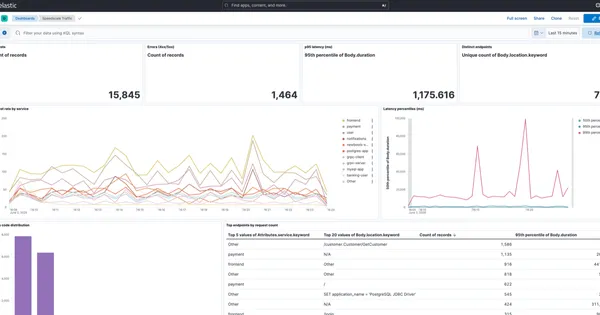
Capture production traffic and store it in your own Elasticsearch with Speedscale BYOC. Pull it locally with es-gather.py and reproduce bugs with proxymock.
I tested 100 bugs across 240 microservices the model has never seen. Alert only: 51% pass rate, wrong service 34% of the time. Traffic captures: 77%.