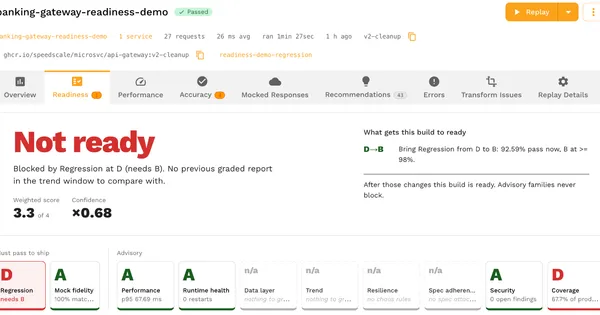
Automatic Release Readiness Scorecards
Speedscale's release readiness scorecards grade replay results, explain release blockers, and track accepted findings against your team's configured rules.
Browse 39 posts in this category
Speedscale's release readiness scorecards grade replay results, explain release blockers, and track accepted findings against your team's configured rules.

Most flaky test fixes focus on retries and quarantine. The real fix is replacing hand-written test data with recorded traffic that stays fresh.

Record real PostgreSQL traffic with proxymock and replay it deterministically. No more local database setup, no more seeded test data.

Record real MySQL traffic with proxymock and replay it in tests. Eliminate local database setup and flaky CI runs.

Use OpenTelemetry traces to choose high-risk flows, pair them with captured traffic, and gate CI on reviewed replay results and explicit failure criteria.

Give developers production-shaped debugging data with RBAC and DLP. Separate permissions from redaction and verify where sensitive fields are removed.
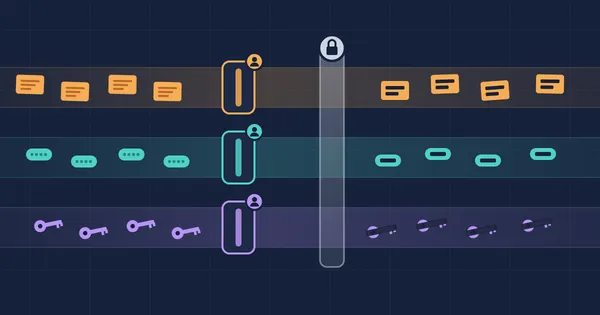
One forwarder, many teams, one DLP rule nobody wants to touch. Scoped group rules let each team own its redaction. How-to for proxymock web and Speedscale.
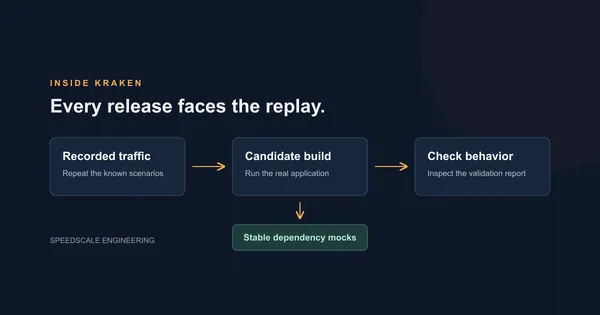
See how Kraken combines traffic replay, stable dependency mocks, and evolving regression coverage to catch Speedscale release failures before production.

We shifted testing, security, and CI/CD left. Observability stayed in production. With AI writing code faster, validation is the bottleneck.
Choose the desktop proxymock or the hosted cloud trial to get started.