Holiday readiness: run your first load test with skills
Start holiday readiness with a local proxymock load test. Use agent skills to record a Node app, mock its API dependency, and inspect the results.
Browse 79 posts in this category
Start holiday readiness with a local proxymock load test. Use agent skills to record a Node app, mock its API dependency, and inspect the results.
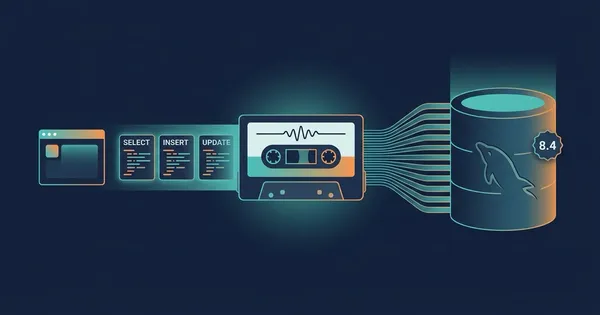
Replay your app's recorded MySQL statements against 8.4 to catch upgrade regressions, then load test the database with the same workload using proxymock.
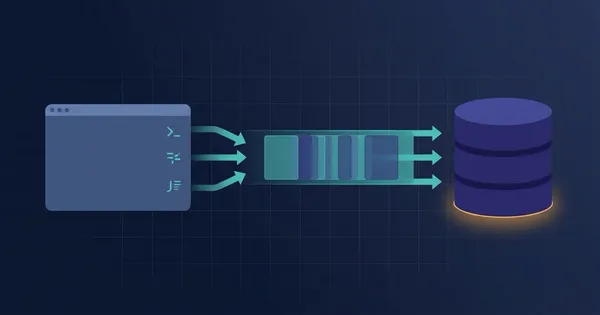
Replay recorded PostgreSQL queries to catch schema regressions and run realistic database load tests with proxymock, using the CLI or an AI assistant.
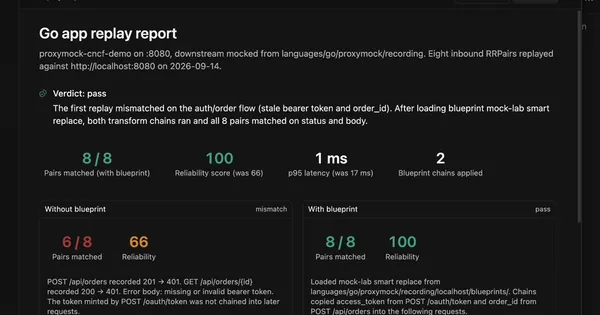
Have your coding agent test AI-generated code with proxymock: capture working API traffic, replay it against changes, and inspect the results.

Follow an eBPF debugging trail through rustls, Tokio inlining, and an empty map to learn how TLS plaintext gets matched to the right TCP connection.
Teams run inventory, security logs, request routing and billing through OpenTelemetry. Five non-observability uses, and the failure mode of each.

Part 10 of Getting Started with Mocks: use proxymock to record real API traffic, inject failures, verify side effects, and expose contract drift.

Part 4 of Getting Started with Mocks: the notifier stops returning a message and starts sending one, so the test needs a spy instead of a return value.

Part 3 of Getting Started with Mocks: the same seam, now returning refusals, timeouts and nonsense, so the failure paths finally get tested.
Choose the desktop proxymock or the hosted cloud trial to get started.