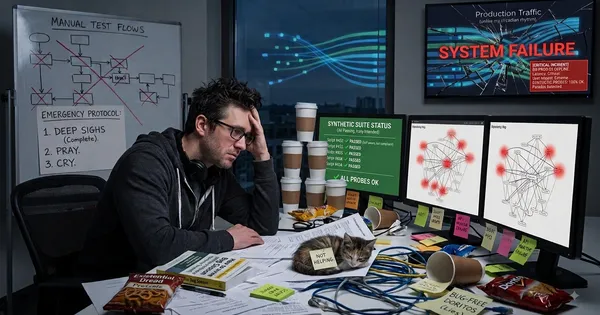
Synthetic Monitoring Is Broken. Your Production Traffic Can Fix It.
Synthetic monitoring depends on scripts engineers maintain by hand. Capturing and replaying real production transactions turns customer behavior into tests.
Co-founder and CEO of Speedscale, passionate about performance engineering. • 9 posts published
Synthetic monitoring depends on scripts engineers maintain by hand. Capturing and replaying real production transactions turns customer behavior into tests.

A production bug survived two confident fixes and green tests. Replaying the captured request exposed the missing state and proved the real fix.

AI pushed throughput up 59%, yet median delivery got worse. The bottleneck moved to validation. How replaying production traffic in CI closes the gap.

A second run of our AI bug-fixing benchmark shows where captured traffic lifts agents toward 90%, why service maps barely help, and which bugs still fail.
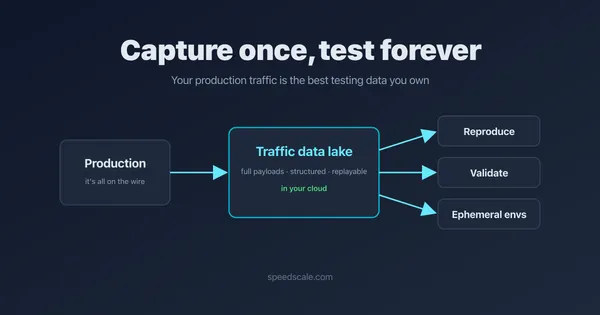
Production traffic is the most complete record of what your system does, and most teams throw it away. One capture powers reproduce, validate, and sandbox.

MSA clauses and contractual guarantees aren't an architecture. If your production traffic leaves your cloud, you're trusting a policy, not a system.
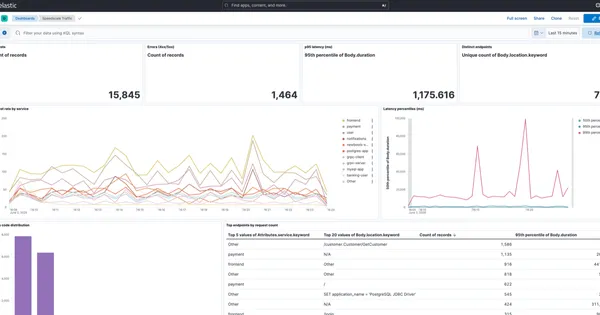
Capture production traffic and store it in your own Elasticsearch with Speedscale BYOC. Pull it locally with es-gather.py and reproduce bugs with proxymock.

I tested 100 bugs across 240 microservices the model has never seen. Alert only: 51% pass rate, wrong service 34% of the time. Traffic captures: 77%.

Traffic Context is the missing piece in most debugging workflows. We ran our autonomous agent on a real production bug — it found the root cause, wrote a reproduce harness, applied the fix, and confirmed it. Here's what that looked like.
Choose the desktop proxymock or the hosted cloud trial to get started.