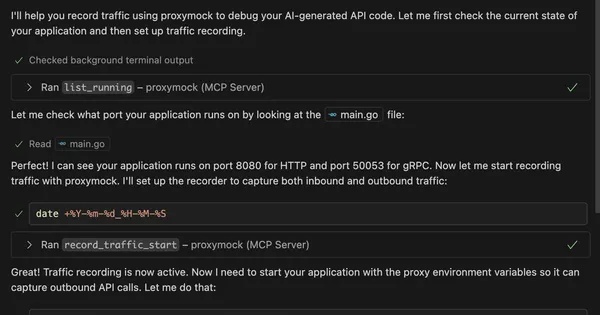
The Developer’s Guide to Debugging AI-Generated Code
Debug AI-generated code with proxymock: reproduce failing API calls, inspect response differences, preserve the baseline, and verify fixes before release.
Speedscale Team is a contributor to the Speedscale blog. • 9 posts published
Debug AI-generated code with proxymock: reproduce failing API calls, inspect response differences, preserve the baseline, and verify fixes before release.

Give developers production-shaped debugging data with RBAC and DLP. Separate permissions from redaction and verify where sensitive fields are removed.

Speedscale vs. Keploy: compare passive capture, protocol coverage, local replay, load testing, and data controls for production traffic testing.

Validate Spring Boot upgrades with recorded traffic. Compare API behavior, control dependencies, and review changes before updating the test baseline.
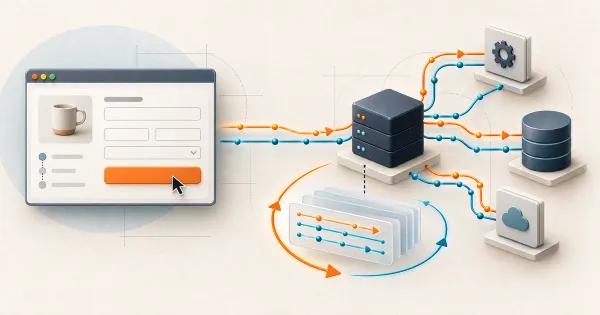
Compare TestInspector vs Speedscale for API regression, dependency mocking, and load testing. Check documented differences and try a local replay today.

Capture one service's API traffic, replay it against a Kubernetes test workload, and use the report to tell a regression from a replay setup problem.

Keploy's Speedscale comparison gets the architecture wrong. Check its claims against the docs for eBPF capture, TLS, automatic mocks, and local testing.
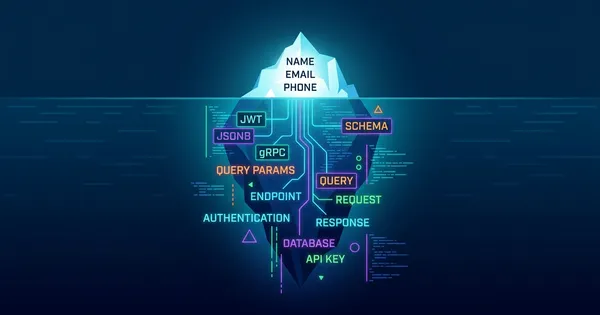
Using 'production-similar' data in pre-production is a major security risk. Learn why traditional masking fails, where hidden PII hides, and how to fix it.

Explore the technical architecture of the AI Software Factory, focusing on tool convergence and the Unified Context Layer.
Choose the desktop proxymock or the hosted cloud trial to get started.