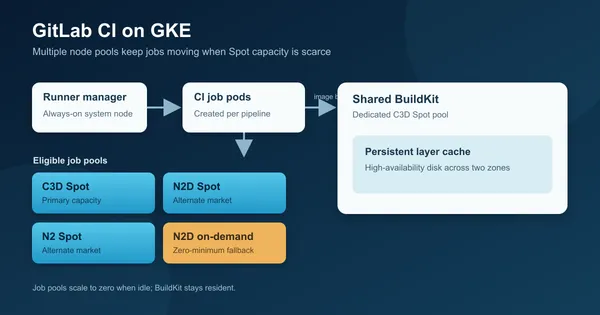
How We Rebuilt GitLab CI on GKE Spot VMs
How we moved GitLab CI to GKE with shared BuildKit caching, multiple Spot machine types, and an on-demand fallback for scarce capacity.
Senior engineer at Speedscale, specializing in Kubernetes and cloud native technologies. • 9 posts published
How we moved GitLab CI to GKE with shared BuildKit caching, multiple Spot machine types, and an on-demand fallback for scarce capacity.

Follow an eBPF debugging trail through rustls, Tokio inlining, and an empty map to learn how TLS plaintext gets matched to the right TCP connection.
How our nettap eBPF agent produced garbage HTTP bodies from kernel iov_iter scatter-gather buffers, and the CO-RE plus task-local storage fix that made it correct.

After spending hours or even days manually testing your software, you may be wondering whether or not there's a better way. The good news? There is.
Building a targeted eBPF network traffic capture tool reveals why a general-purpose eBPF observability agent is exponentially harder.
There are many reasons why you might want to leverage eBPF for plaintext inspection of TLS traffic including security monitoring, debugging, traffic.
Learn how to use Claude Code sub-agents to get a 'second opinion' from other LLMs and build more reliable AI applications.
When I first started writing Go software a little over a decade ago, one of the features I found particularly intriguing was the ability to build...

Production traffic can often be unpredictable, and distinguishing genuine user interactions from mere noise becomes a pivotal step in comprehensively.
Choose the desktop proxymock or the hosted cloud trial to get started.