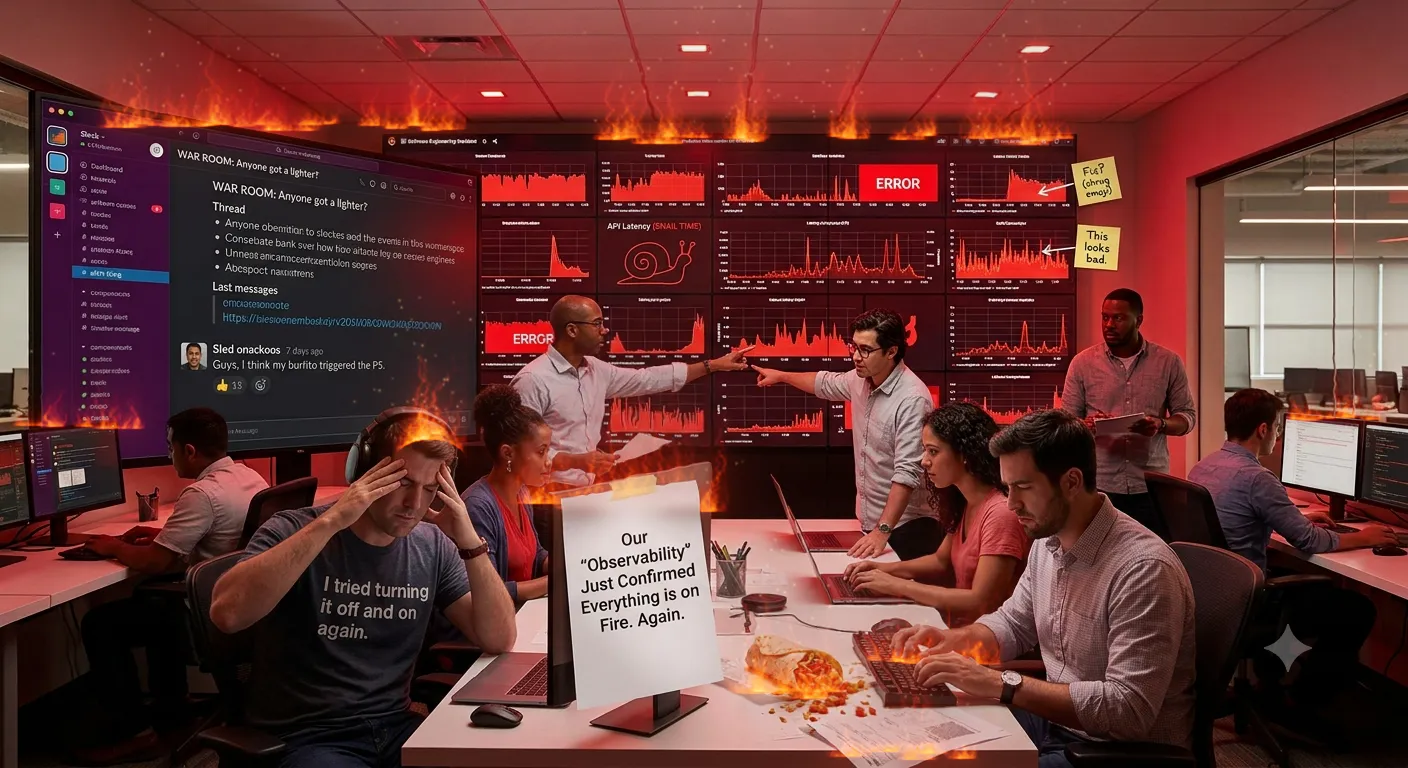
Your Observability Stack Found the Fire. Congratulations.
The dashboards are red, the alerts are firing, and Slack has officially become a war room. Someone has asked, “Anyone else seeing this?” and 14 people have immediately responded with screenshots. Welcome to another day in distributed systems.
The recent GitHub outage is a great reminder of how complicated modern applications have become. Services talk to services, infrastructure scales up and down, retries multiply traffic, and dependencies behave in ways nobody expected. Thankfully, we have observability. Logs, metrics, traces, dashboards, alerts, and increasingly AI-powered tools can give engineers an incredible amount of information about what is happening.
But here’s the problem: seeing the fire doesn’t necessarily tell you how to recreate it.
- Observability is excellent at telling you an incident happened and where it started; it rarely gives you a way to recreate the conditions that caused it.
- A trace is evidence of one request’s path. Reproducing an incident means recreating the traffic patterns, timing, and dependency behavior that produced the failure.
- Capturing and replaying real production traffic turns incidents into repeatable experiments, and your worst outage into a regression test.
1. 🔥 Your Observability Stack Found the Fire. Congratulations.
Modern observability is incredibly good at telling us when something has gone wrong. Latency spikes, error rates increase, a dependency slows down, or CPU suddenly hits 100%, and there’s a dashboard, alert, or trace ready to tell you about it. The problem isn’t a lack of information. It’s what happens next.
During a complex production incident, engineers aren’t just asking, “What happened?” They’re asking, “Why did it happen?” And eventually, “Can we make it happen again?” That’s where things get interesting.
Distributed systems rarely fail in neat, reproducible ways. An incident might depend on a particular combination of user behavior, API calls, timing, traffic volume, downstream dependencies, retries, configuration, and infrastructure. You can have all the telemetry in the world and still struggle to recreate the exact conditions that caused the failure.
Observability can tell you the building is on fire. It doesn’t necessarily give you a building where you can safely start another fire.
2. 🕵️ Your Traces Are Great. They’re Just Terrible Witnesses.
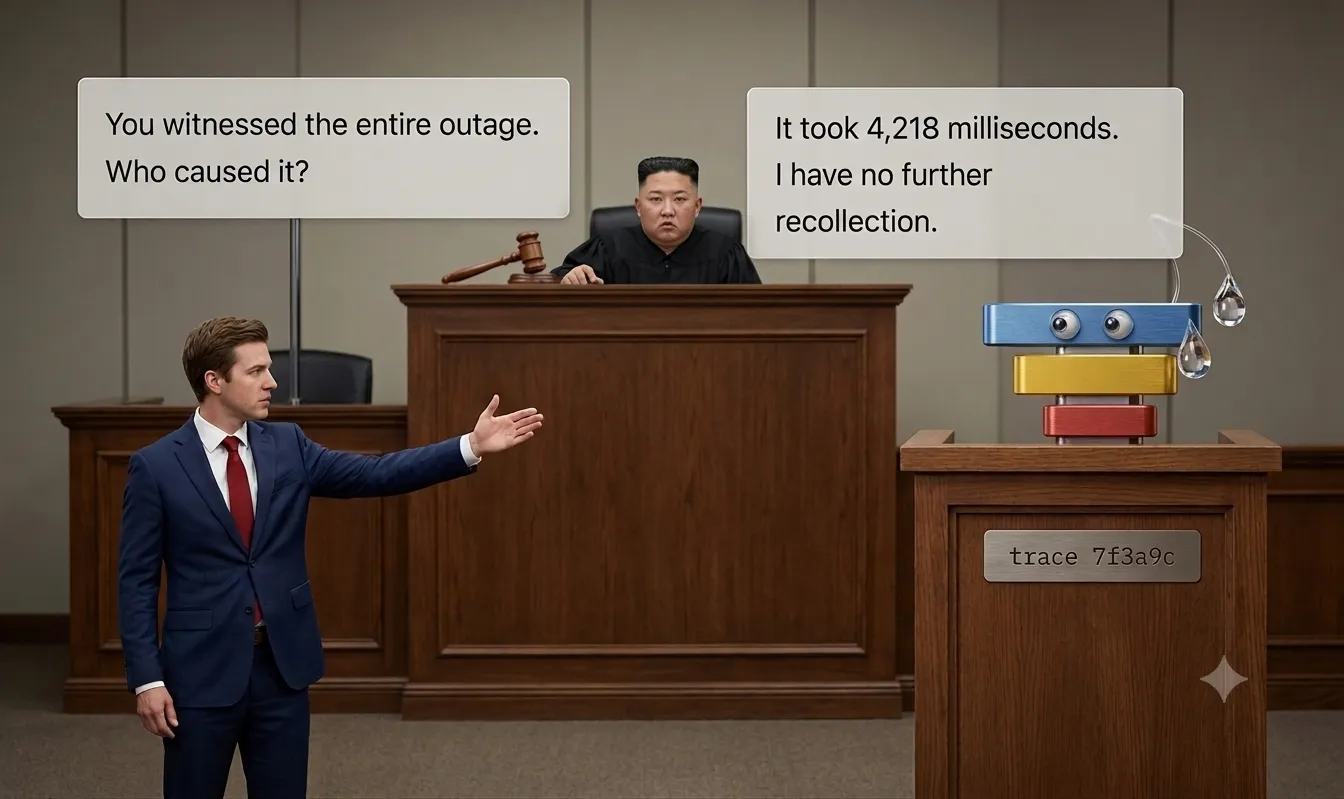
Don’t get us wrong. We love traces. They are incredibly valuable for following requests through complicated systems and understanding where things slow down or fail. But a trace is evidence. It’s not a time machine.
Imagine investigating a production incident like a crime scene. You’ve got fingerprints, security footage, phone records, a suspicious coffee cup, and 47 Kubernetes pods that all claim they were somewhere else. That’s essentially what debugging a distributed system can feel like.
A trace might tell you that Service A called Service B, which called Service C, which timed out and triggered a retry. That’s useful. But what if the problem only occurs when thousands of customers generate a particular pattern of requests? Or when a dependency becomes slow? Or when retries begin amplifying traffic? Or when a configuration change interacts with real customer behavior in a way your test environment never anticipated?
Now you’re not just trying to understand the incident. You’re trying to recreate the conditions that produced it.
That’s an important distinction. Observability gives you the clues. Real traffic gives you the crime scene.
3. 💥 Stop Staring at the Dashboard. Recreate the Disaster.
This is where production traffic becomes incredibly valuable. Instead of trying to reconstruct an incident from logs and traces alone, imagine being able to take the actual transactions that matter and replay them in a controlled environment.
We’re not talking about a synthetic request that vaguely resembles what a customer might do. We’re not talking about manually constructing another happy-path test. We’re talking about the real behavior of your application: the APIs, dependencies, payloads, and transaction flows that your customers actually generate.
With Speedscale, teams can capture real application traffic and replay it in controlled environments. Engineers can reproduce production behavior, make a change, replay the same traffic, and observe what happens. Instead of saying, “We think we fixed it,” they can say, “We reproduced the failure, made the change, replayed the traffic, and verified the behavior.”
And that capability doesn’t have to end when the incident is resolved. The same production behavior can become a regression test. A difficult customer scenario can become a repeatable test. A strange edge case that nobody could reproduce can become something engineering teams can run again and again.
That’s the shift from observability to actionability. Observability helps you understand what happened. Traffic replay gives you a way to do something about it.
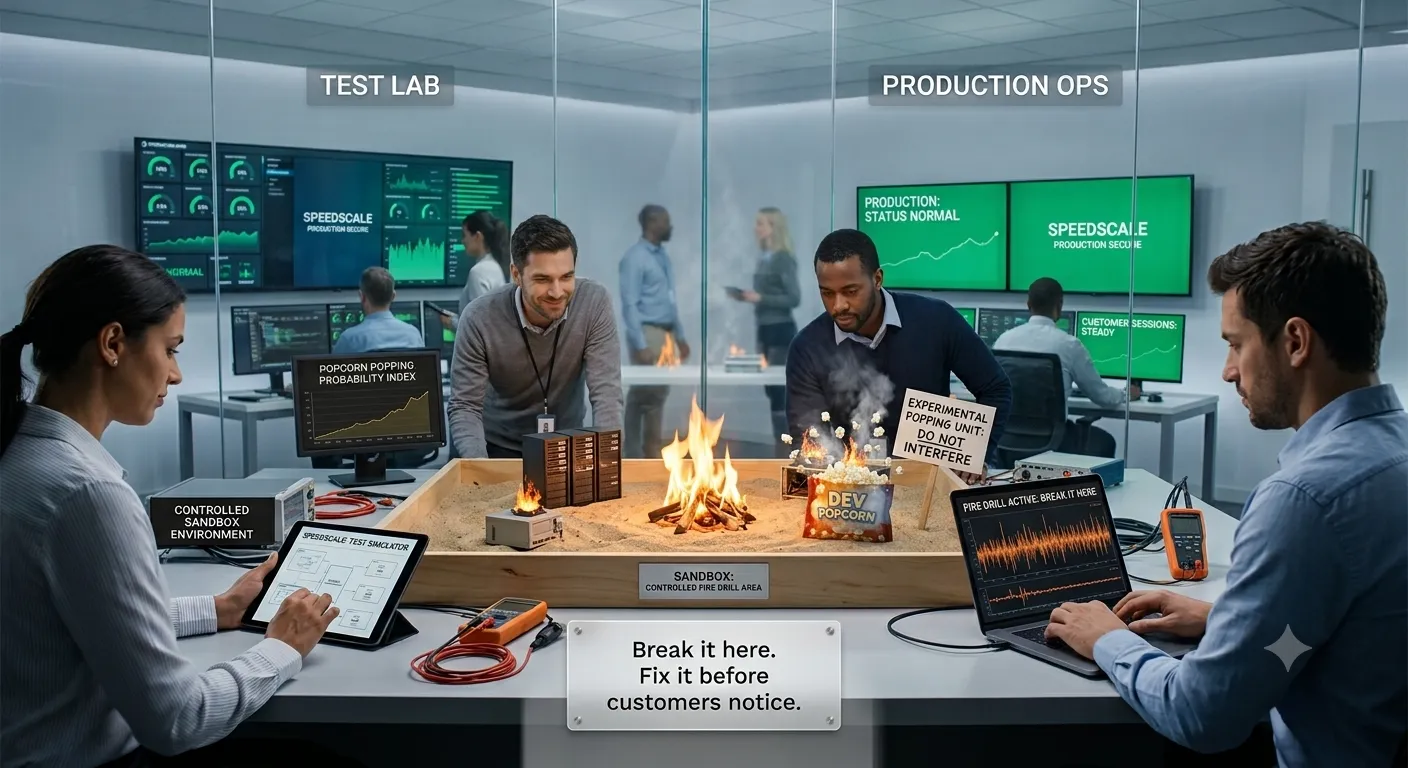
4. 🚒 The Next Generation of Observability Needs a Fire Drill
For years, the observability conversation has focused on getting better visibility: more telemetry, more data, better dashboards, faster alerts, and smarter analysis. That’s all important, but visibility is only part of the equation.
The next step is asking what happens after you’ve found the problem. Can you reproduce it? Can you test the fix against the same behavior that caused the incident? Can you turn what you learned into a test so the same failure doesn’t surprise you six months from now?
The future of observability should connect the dots: Observe → Capture → Replay → Fix → Validate → Automate.
Your worst production incident shouldn’t become another war story that gets told around the engineering team. It should become a test case.
Maybe that’s the real evolution of observability. Knowing when the building is on fire, and which room caught fire, is table stakes. The next step is a safe place where you can recreate the fire, understand exactly what caused it, and prove you’ve put it out.
Your observability stack can tell you there’s a fire. Speedscale helps you recreate the fire, without calling the fire department.